Mental health platform
Mental health app development: how Dovira runs two surfaces as one service
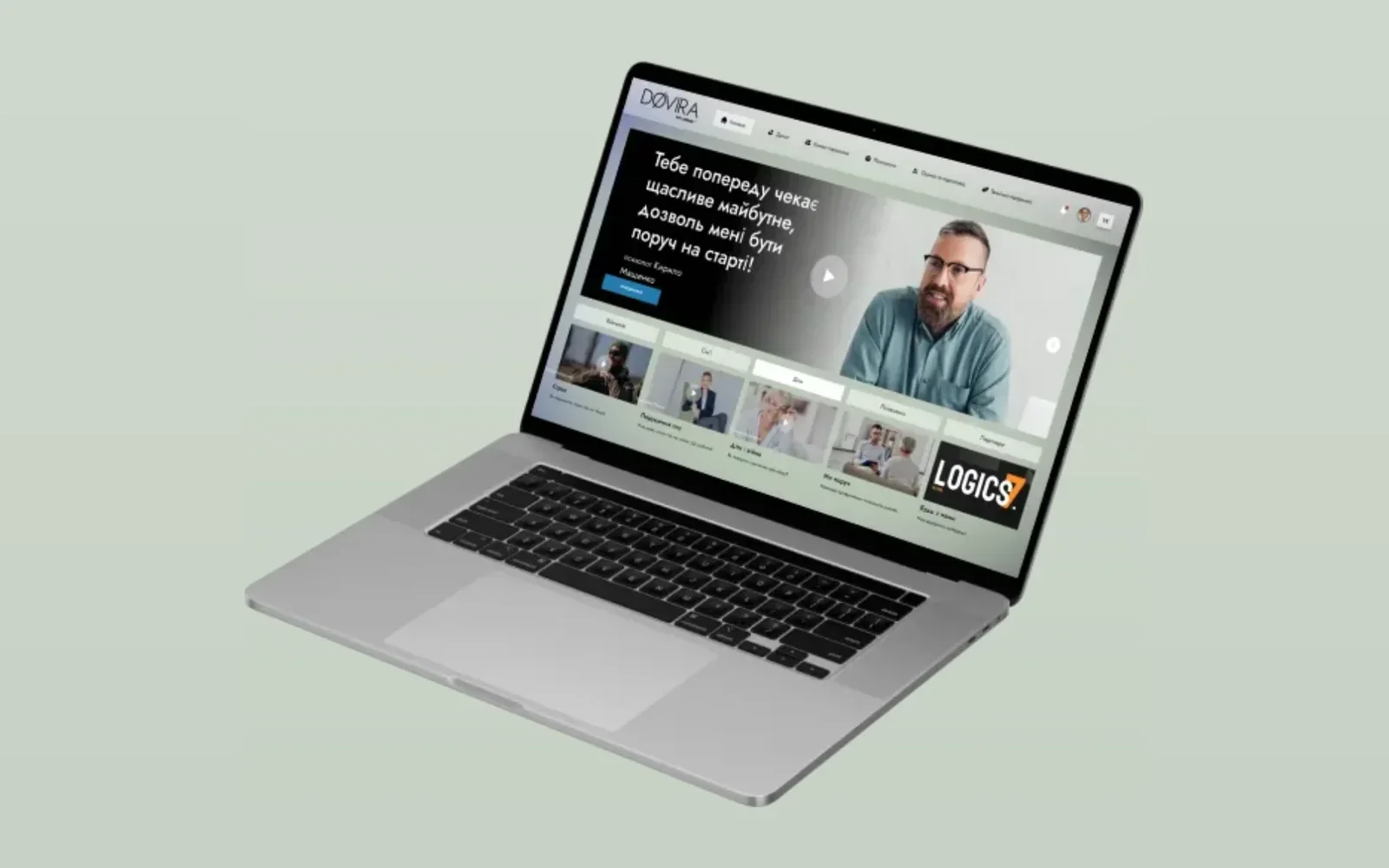
Dovira is a Logics7 digital mental-health platform, founded and built by the company’s leadership. A note on matching, scheduling and the two surfaces a support service needs to run as one.
Dovira — a Logics7 digital mental-health platform, founded and built by the company’s leadership: matching, scheduling, member and practitioner surfaces operated as one service. This note describes the product logic. It is not medical advice and makes no claims about clinical outcomes.
Key points
- Mental health app development starts with two surfaces, member and specialist, built at once on one record.
- In Dovira, matching, scheduling and video sessions share one calendar and one session record.
- The platform organises access to support. The support itself belongs to the practitioner.
Mental health app development is usually briefed from the member’s side: sign up, pick a specialist, join a call. Dovira, a Logics7 digital mental-health platform founded and built by the company’s leadership, was built from both sides at once. This note sets out the product logic behind it: matching, scheduling, video sessions and the two surfaces that have to run as one service.
It is not medical advice and makes no claim about clinical outcomes. Dovira organises access to support; it does not treat anyone.
What Dovira is
Dovira is an online platform that connects people with practitioners for consultations: individually, as a family or in a group. It is a Logics7 product, and Logics7 operates it. Our role covers product structure, the platform, matching and scheduling, and operations.
Three things sit on one platform:
- One-to-one video consultations and group sessions in the browser, built into the product rather than borrowed from a generic tool.
- A video content library by section, with a featured session, so support continues between appointments.
- A member surface and a specialist surface, operated as one service.
Its purpose fits in four words: psychological support, made accessible. The problem it addresses is logistics, the part of mental health app development that is easiest to underestimate. Support fails at the logistics before it fails at the conversation: finding the right specialist, booking a time, joining the session and coming back next week. A service that runs on trust has to make each of those steps simple, for members and for the specialists behind them.
Two surfaces, one service
A teletherapy platform, a coaching service and an expert-consultation marketplace share one trait: each is two products that have to behave as one. The common failure in mental health app development is to build the member app first and leave the practitioner portal for later. The service then runs on messages and spreadsheets behind a polished front-end, and every booking, change or cancellation becomes manual work.
Dovira was built from both sides at once, so what the member sees and what the practitioner sees are two views of the same state.
Member surface: find, match, book, attend
The member finds a specialist through matching, books a time, attends the session and follows up. Matching, booking and the session land on one calendar and one session record, the same ones the specialist works from. The member home, the session player and the content sections work on desktop and on the phone.
Specialist surface: availability, sessions, records
The specialist keeps a profile, sets availability, runs sessions and keeps records. Schedules, sessions and member requests sit in one place. This surface is half of the product, not an admin panel added after launch.
| Aspect | Member surface | Specialist surface |
|---|---|---|
| Holds | Member home, video library by section, featured session | Profile, availability, schedules, sessions and records |
| Main actions | Find, match, book, attend, follow up | Set availability, run sessions, handle member requests |
| Shares | One calendar, one matching logic, one session record | The same calendar, matching logic and session record |
Matching and scheduling: where trust is won or lost
In Dovira, matching and scheduling are one flow: the right specialist and a time, found together. In online therapy platform development, therapy appointment scheduling is often treated as a calendar widget next to a directory. In a two-sided service, it is the product.
The member journey
- 01Find and matchOne matching logic points to the right specialist.
- 02Book a timeOne calendar, shared by member and specialist.
- 03Attend the sessionOne-to-one or group video, built into the product.
- 04Follow upThe video library keeps support going between appointments.
Three tests of the flow
Three things decide whether the flow works:
- Matching quality. The person reaches the right practitioner at the moment they ask, not a list to scroll. Good therapist matching takes work away from the person asking for support; a directory hands it back.
- The practitioner’s economics: availability, no-shows, payouts. A service nobody wants to work in does not stay a service.
- Predictability. The platform behaves the same way every time. In a high-stakes context, that is what trust is made of.
This is also where user retention is decided. In a two-sided service, trust and scheduling decide whether people come back.
Privacy, consent and urgent requests in mental health app development
Some decisions in mental health app development come before the first screen, because they shape every screen after it. They carry legal and professional consequences, so they belong with the operator and qualified advisers, not with the build team alone. We list them as questions. This section is not legal advice and makes no compliance or security claim about Dovira.
- Data category. Under the GDPR and the UK GDPR, data concerning health is special category data; in the US, HIPAA can apply. Which rules apply depends on where a platform operates and whom it serves.
- Consent. What the member agrees to share, with whom, for how long, and how they withdraw it. If there is an intake questionnaire, who reads the answers. Informed consent to the support itself sits with the practitioner.
- Messages, video and records. Where they are stored, who can open them, and how secure messaging and encryption are handled, written down before launch.
- Urgent requests. A booking platform is not an emergency service. The product should say so plainly and show a crisis escalation route to help outside the platform, agreed with qualified advisers.
Calling a therapy platform GDPR- or HIPAA-compliant is a legal conclusion, not a feature. Professional guidance for remote practice, such as the APA Guidelines for the Practice of Telepsychology, is addressed to practitioners, not to software. A platform team reads it to understand what practitioners need from the product. The boundary holds throughout: the platform organises access to support and runs the service around it; the support itself belongs to the practitioner.
What this model can be built for
The same structure serves coaching and telehealth platforms, expert-consultation marketplaces, corporate wellbeing programmes and any two-sided service where trust, scheduling and confidentiality decide whether people come back.
In mental health app development, the order matters more than the feature list. For an MVP, both surfaces, one calendar, one session record and video inside the product come first. A subscription model or EHR integration is planned against that core, not in place of it.
Logics7 builds these as products to be operated. A new product starts with Product Partnership: we check whether the market, the product and the commercial logic hold before any development is discussed. If a grant or funding process is part of the plan, Funding & Grant Support prepares the product case behind the application. The screens and the structure are in the Dovira case study.
Dovira is how Logics7 runs a high-trust service as a dependable product. If you are building a two-sided service, start with the right route.
Questions readers ask
What does an online therapy platform need at launch?
Both sides working on day one. Members need to find, match, book, attend and follow up; specialists need availability, sessions and records. Both work from one calendar and one session record, with video inside the product. Add written rules for data, consent and urgent requests, set with qualified advisers. The rest can follow.
How does therapist matching work?
It pairs a request with the right specialist and a time. In Dovira, matching and scheduling are one flow, so both land on the same record the specialist works from. The test is whether the person reaches the right specialist when they ask, not a list to scroll.
Which privacy rules apply to an online therapy platform?
It depends on where the platform operates and whom it serves. Under the GDPR and the UK GDPR, health data is special category data; in the US, HIPAA can apply to covered entities and their business associates. This is not legal advice: confirm the rules with a qualified adviser before the first screen is designed.
Written by

Dmitry Suponev
Founder
Product and engineering execution since 2012. Leads Logics7's technology architecture; co-founder of Vendo AI.
View profile
Working on something similar? Start a conversation.
A new product, a business process, a live product, a grant application or an introduction — a few lines are enough to find the right next step.
We reply within one working day.