Simulation & training
Military training simulation software: engineering PSS by Logics7
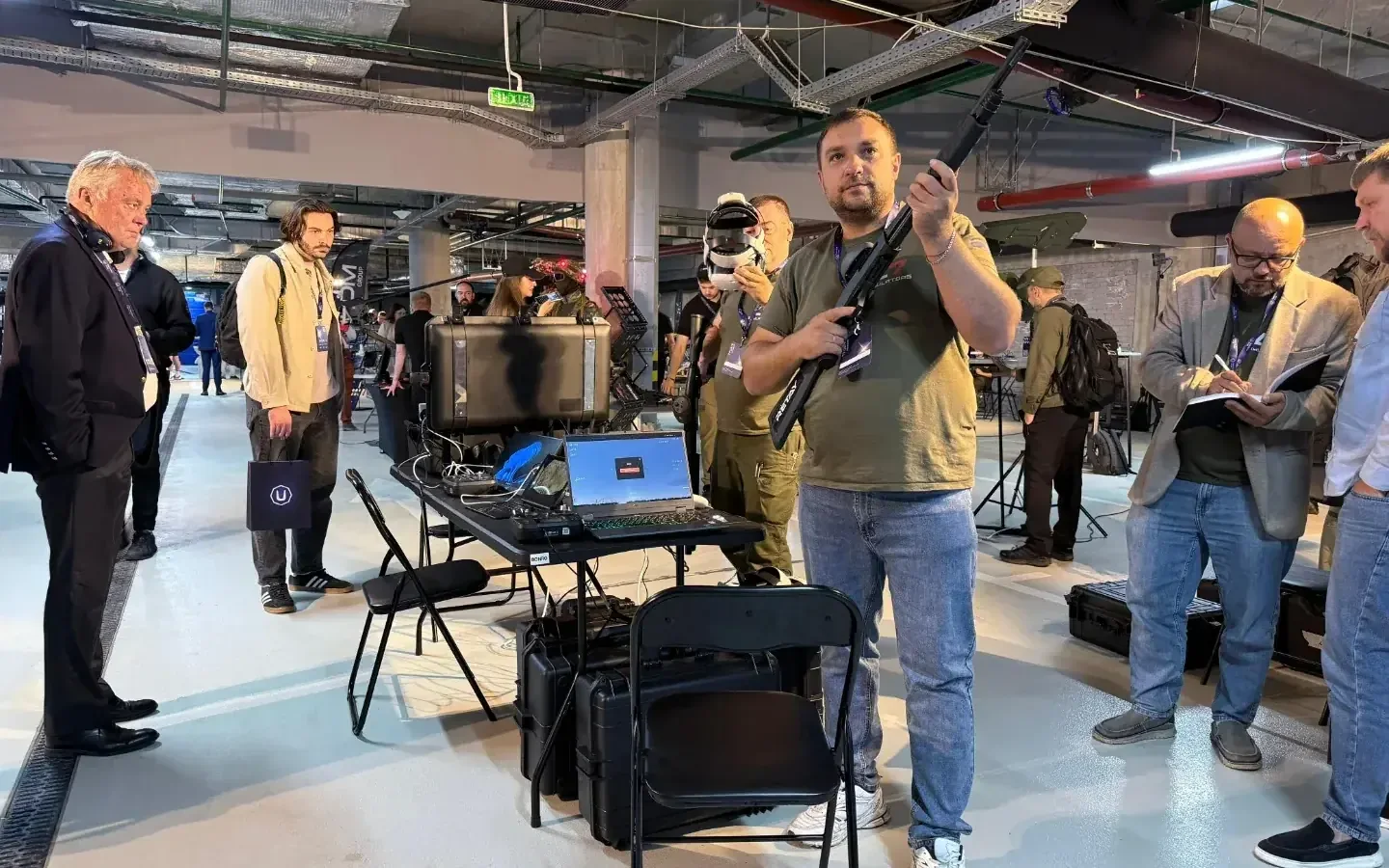
A professional military simulation platform, engineered by Logics7 as PSS by Logics7: 50+ training modules across software, hardware and analytics, and NATO codification in 2024.
PSS by Logics7 — a professional military simulation platform whose software Logics7 engineered. In 2025, production and software rights were transferred to the L7 group; the product continues under the L7 Simulators brand.
Key points
- Military training simulation software counts only when every session behaves identically: scenario, measurement and hardware.
- PSS by Logics7: 50+ training modules; laser-based and VR training on one scenario engine.
- The session cycle: plan, run on connected hardware, capture results, review with the trainee.
Military training simulation software is only as useful as it is repeatable. A session counts as training when the scenario logic, the measurement and the hardware behave the same way every time, for every trainee and every module. We engineered the software of a professional military simulation platform, PSS by Logics7, on that principle. This note sets out what was built, why the engineering is the hard part, and how a training session runs from plan to review. It documents our role before the 2025 transfer.
What was built: one platform across software, hardware and analytics
We engineered 50+ training modules spanning the software runtime, the integrated hardware and the analytics layer. Laser-based and virtual reality (VR) training run on one scenario engine and share one analytics model, so a result recorded in one modality means the same thing in the other. The platform supports multi-user team scenarios, configurable conditions, session-level analytics and mobile or classroom deployment.
| Component | What it does | What it keeps consistent |
|---|---|---|
| Scenario engine | Configurable scenarios, environmental conditions, multi-user coordination | One scenario logic across all modules |
| Hardware integration | Projection, sensor and headset integration under one runtime | One integration layer across all modules |
| Session analytics | Per-session data and structured trainee performance scoring | Comparable results across laser and VR |
| Multi-user coordination | Team scenarios with synchronised state | One synchronised state for the whole team |
Why engineering is the hard part of military training simulation software
Simulation at this level is not a graphics problem; high-fidelity visuals do not make a session count. It is a systems problem: scenario state, multi-user synchronisation, sensor and projection hardware, and per-session data that instructors can actually read. It is also a documentation problem. Repeatability, quality control and traceability were built to the standard the platform was later assessed against, rather than reconstructed afterwards.
Scenario design and instructor control
In simulation-based training the scenario is the lesson plan. A scenario library is only useful if each scenario can be configured and then runs exactly as designed. On PSS by Logics7, scenarios are configurable, with environmental conditions and multi-user coordination. Sessions are run from an instructor station, with session control and the live scenario on the instructor display.
Hardware–software integration
A training simulator is hardware and software at once. In hardware-in-the-loop training, physical equipment and software form one loop; if projection, sensors and headsets answer to different logic, the same scenario behaves differently on different stations and results stop being comparable. We integrated projection, sensor and headset hardware under one runtime and ran both training modalities on the same scenario engine. In military training simulation software built this way, the hardware is one layer of the platform, not a separate product.
Analytics and after-action review
After-action review is where a session becomes learning: what happened, what was expected, what to change next time. It depends on data that is complete and consistent across sessions. The platform records per-session data and structured trainee performance scoring. Because both modalities share one analytics model, an instructor reviews one kind of result, not two.
The training session cycle
The cycle below comes from the companion Training App (2024 — present, live with restricted access), documented in the L7 Simulators Training App case study. Our role there covers the web platform, the trainee workflow and analytics access. The app turns each simulator session into structured data for trainees, instructors and programme leads.
- 01Plan the sessionBuild the scenario, assign trainees, schedule equipment.
- 02Run on connected hardwareThe session runs from the instructor station.
- 03Capture resultsSession data flows from the simulator hardware into the platform.
- 04Review with the traineePer-session data and scoring support the after-action review.
- 05Track progressTrainees see their progress; instructors see cohort performance.
Access is role-based: trainees see their own progress, instructors see cohort performance, programme leads see deployment-wide statistics. The loop closes when the review shapes the next plan.
Codification and the 2025 transfer
In 2024 the platform reached NATO codification. Logics7's role covers the engineering of the platform before the 2025 transfer; the 2024 codification was achieved on that platform. In 2025, production and software rights were transferred to the L7 group, and the product continues under the L7 Simulators brand.
In general terms, codification is catalogue identification within the NATO Codification System, overseen by NATO's codification group, AC/135. It is not a certification or a performance rating. The platform's history is in the L7 Simulators case study.
What it proves for other high-stakes training products
That Logics7 can engineer a hardware-integrated system to a codification standard, and carry it across software, hardware and analytics as one platform rather than three products. The lesson reaches beyond military simulation software. Training simulator software development follows the same discipline wherever a physical process has to be measured and repeated: emergency-response training, medical procedure simulation, industrial safety, heavy machinery operation, aviation procedures.
If you run a live training product with users and growth has stalled, Existing Product Review is the route where Logics7 looks at the code, the business logic and the market, and decides whether to invest. If you are building a system where the measurement has to hold up, start with the right route.
Questions readers ask
What makes military training simulation software different from a game engine?
Repeatability and measurement. A game has to look right; a training system has to behave the same way for every trainee and record results an instructor can compare. On PSS by Logics7 that meant one scenario engine and one analytics model for laser-based and VR training.
Does NATO codification mean NATO certified the product?
No. Codification is catalogue identification within the NATO Codification System, not a certification, a test or an endorsement of performance. For PSS by Logics7 we state only that in 2024 the platform reached NATO codification, and we do not describe it as certified.
How is simulator software built alongside hardware?
As one system. On PSS by Logics7, projection, sensor and headset hardware were integrated under one runtime, and laser-based and VR training run on one scenario engine with one analytics model. Scenario logic, measurement and hardware behaviour are designed together, so sessions stay repeatable and results stay comparable.
Written by
Dmitry Suponev
Founder
Product and engineering execution since 2012. Leads Logics7's technology architecture; co-founder of Vendo AI.
View profile
Working on something similar? Start a conversation.
A new product, a business process, a live product, a grant application or an introduction — a few lines are enough to find the right next step.
We reply within one working day.